The home fitness buyer is no longer won over by another giant screen in the spare room. Peloton Row now sits at the center of a bigger question: can a premium machine coach you well enough to change how you train at home? The answer matters for U.S. shoppers who want a low-impact cardio option, a guided strength plan, and fewer wasted workouts before work, after school pickup, or during a tight lunch break. Peloton’s newer Cross Training Row+ brings Peloton IQ into the rower experience, with personalized plans, form feedback, rep tracking, suggested weights, and hands-free controls available across the brand’s higher-end cross-training line. For readers following consumer fitness technology, the bigger story is not the rower alone. It is the shift from “take another class” to “train from a plan.” That shift could help the connected rower feel less like a luxury screen on rails and more like a practical coach for people who need structure without keeping a trainer on standby.
Why Peloton Row AI Coaching Matters More Than Another Screen
Peloton’s smartest move is not adding more noise to the workout. It is trying to remove the blank space before it. Anyone who owns home equipment knows the hardest part is often the five minutes before the session starts. You stand there, scrolling, tired, half-ready, wondering whether to row hard, lift light, stretch, or quit and call it recovery. Peloton IQ is built to answer that moment with weekly plans, workout suggestions, pattern-based insights, and guided strength tools that tie your recent work to your next move. The appeal is not that software sounds futuristic. The appeal is that it can make a Tuesday workout feel less like a separate project.
What AI Fitness Coaching Changes During a Row
AI fitness coaching sounds flashy until you put it in a plain setting. Say you have 25 minutes before your first video call. Old home equipment asks you to pick a class, set the intensity, judge your form, and decide whether the session fits your week. That is too many decisions for a person who still has coffee cooling on the counter.
The newer Peloton setup aims to cut that burden. It can point you toward work that fits your goal and recent training, then use the screen and sensors to keep the session from drifting. That does not replace effort. You still have to push through the drive and finish the piece. It does make the workout feel less like guesswork and more like following a plan built from what you have already done.
The non-obvious win is restraint. A good coach does not always tell you to go harder. Sometimes the better call is a steadier row, a shorter strength block, or a recovery day that keeps you from turning one bold week into two sore ones. That is where AI fitness coaching can help most. It can turn progress into a pattern instead of a mood.
Where the Machine Still Has to Earn Trust
Smart coaching has one weak spot: belief. People trust a human coach because the coach can see the whole room. They hear your breathing, watch your posture, notice when your mood is off, and adjust. A screen has to earn that trust through repeated moments where its advice feels right.
That is why form feedback matters more on a rower than it does on many cardio machines. Bad rowing can look productive. You can sweat hard while yanking with your arms too early, rushing the slide, or collapsing your torso at the catch. The machine may still show effort, but your back and shoulders know the truth later.
For a home user in Ohio, Texas, or Florida, that feedback can be the difference between using the connected rower for years and slowly avoiding it. The machine has to make the right way feel easier to repeat. If it only celebrates output, it misses the point. Trust grows when the advice catches small errors without turning the workout into a lecture. A useful cue should feel like a tap on the shoulder, not a scolding. That tone matters because most home athletes are alone, and shame is a poor fuel for consistency.
The Connected Rower Is Becoming a Full-Body Training Hub
The rower used to have a narrow job in many homes. It sat in the corner for hard cardio days, then got folded or ignored. Peloton is trying to stretch that role. The Cross Training Row+ has a 23.8-inch screen that rotates for off-rower work, magnetic resistance, vertical storage, a movement-tracking camera, and features meant to support strength, yoga, and other training away from the rail. That matters because most people do not fail at fitness from lack of one perfect exercise. They fail because their routine breaks apart when life gets crowded. The promise here is a single training corner that can handle cardio first, then strength, then mobility without making the user rebuild the plan from scratch.
Why a Home Rowing Workout Fits Busy U.S. Schedules
A home rowing workout has a quiet advantage: it starts fast. You do not need to drive to a studio, wait for a rack, or plan around weather. You sit down, strap in, and begin. For parents in a split-level house or remote workers with a machine in the garage, that friction drop is worth more than another feature badge.
The CDC says adults need at least 150 minutes of moderate-intensity activity each week, plus 2 days of muscle-strengthening work, and its adult physical activity guidance also notes that activity can be broken into smaller chunks. That goal sounds simple on paper and messy in real life. Meetings run long. Kids get sick. Dinner gets late. A rowing plan that blends cardio with guided strength can help turn scattered 20-minute windows into something that still adds up.
The counterintuitive part is that convenience can raise standards. When the machine is ten steps away, excuses shrink. You may stop accepting random sweat as a plan and start asking whether today’s session serves the week. That mindset connects well with broader low-impact cardio machines, where the winning option is often the one you can repeat without beating up your joints or your calendar. A 30-minute drive to a boutique class may be fun on Saturday. It is a different story at 6:15 on a rainy Wednesday.
The Connected Rower as a Strength Gateway
The connected rower becomes more interesting when it stops acting like a single-purpose machine. Rowing gives you a strong pull pattern and a demanding leg drive, but it does not cover every strength need by itself. Pressing, loaded carries, single-leg work, mobility, and core control still matter.
Peloton IQ’s higher-end strength tools include rep tracking, form feedback, suggested weights, self-paced strength, workout generation, and strength benchmarking on select Cross Training products. That mix can make the machine a gateway into better total training. You finish a row, rotate the screen, pick up dumbbells, and work through a session that does not feel bolted on. A home user who once skipped strength because planning felt annoying may now have a cleaner path.
There is a catch. The best home gym is not the one with the most options. It is the one you can repeat. A dozen choices can bury a tired person. The rower’s value depends on whether the software narrows the path, not whether it opens every door at once. Pairing it with a simple home strength training guide can also help buyers decide which dumbbells, mat space, and recovery habits belong around the machine.
How Form Feedback Changes the Learning Curve
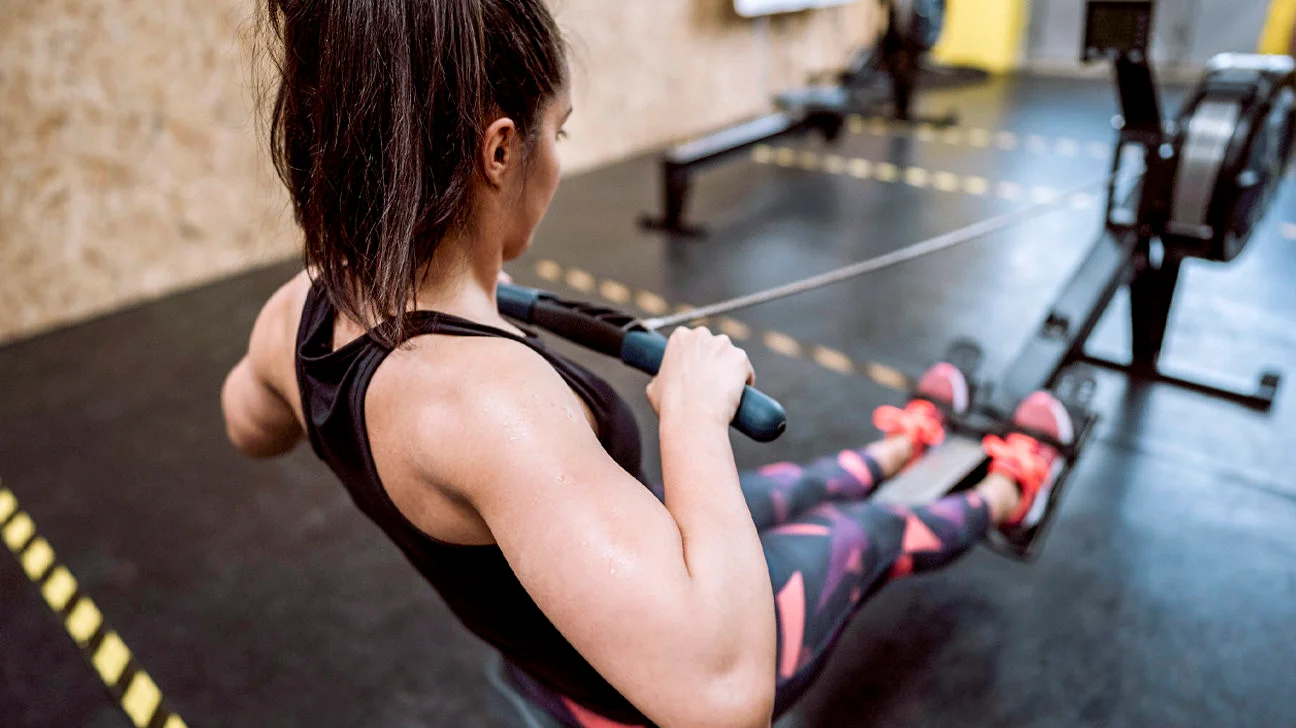
Rowing looks simple from across the room. Slide forward, pull back, breathe hard. Then you try to do it well and discover the timing problem. Legs, body, arms. Arms, body, legs. The order is easy to say and hard to keep when your heart rate climbs. That is where form feedback can matter. Peloton says the Cross Training Row+ offers real-time feedback and a post-class breakdown of stroke quality, while the movement-tracking camera supports form correction, rep tracking, and weight suggestions. Technique is the part of rowing that many shoppers underestimate until the first hard interval exposes it.
Good Technique Is Harder Than It Looks
A new rower often makes the same mistake: they turn the stroke into an arm pull. The handle moves, the screen responds, and the body feels busy. But the strongest part of the stroke should come from the legs. The arms finish the motion. They should not start the whole fight.
Real-time cues can help because rowing errors hide inside rhythm. A mirror may not catch them. A class instructor may not see your machine. A family member walking past the laundry room will offer no useful help. Feedback on the screen can interrupt the habit before it becomes your default style. That is valuable because small form errors tend to feel normal once you repeat them enough.
That is the quiet promise of AI fitness coaching here. It is not magic. It is repetition with correction. A person who rows three short sessions each week with better timing may get more value than someone who crushes one messy 45-minute session and avoids the machine for four days. Better form also changes the emotional side of the workout. You stop feeling like the rower is fighting you. That shift can keep a beginner from blaming their body when the real issue is timing. Confidence is easier to build when the fix feels specific.
Personal Pace Targets Make Effort Less Random
Pace is another place where home rowers get lost. Some go out too hot because the first minute feels easy. Others hold back for the whole class because they fear burning out. Peloton’s support material describes Personal Pace Targets as effort guidance tied to a member’s experience and ability, with instructors calling out pace intensity during workouts.
That matters because effort needs a frame. A target can tell you whether a push is meant to feel controlled, sharp, or near your ceiling. Without that frame, people judge a workout by sweat alone, and sweat is a poor planner. One sweaty day can feel heroic. Three weeks of measured work usually changes more.
A home rowing workout becomes more useful when it teaches pacing instead of only measuring it. You begin to feel the difference between a strong base effort and a late sprint. That skill carries into bike rides, runs, hikes, and weekend sports. The machine becomes less of a scoreboard and more of a teacher. For many Americans who learned cardio through “go hard until you stop,” that lesson is overdue.
Price, Space, and Membership Will Decide the Real Audience
The new feature set does not erase the buying question. It sharpens it. Cross Training Row+ is listed by Peloton at $3,495, with All-Access Membership sold separately. That makes it a serious purchase, not a casual January experiment. The right buyer needs to see the machine as a long-term training base, not a gadget that might solve motivation by itself. Price also changes the standard of proof. At this level, the rower has to earn its place in both the budget and the room. That proof looks different in each home. One buyer may count weekly sessions. Another may care more about replacing two studio memberships, winter cardio, or a shared strength plan.
Who Should Consider the Connected Rower First
The strongest fit is someone who already likes guided workouts and wants one machine to anchor several types of training. Maybe you used a studio rower before and liked the low-impact demand. Maybe running bothers your knees. Maybe you already own dumbbells but never know what to do after cardio.
This buyer benefits from structure. They are not shopping for the cheapest way to sweat. They want coaching, class energy, pacing help, and a plan that can fit into a real American week. For that person, a connected rower can make sense in a basement, bonus room, garage gym, or apartment with careful storage planning. A couple sharing one membership and different fitness goals may also see more value than a solo user who rows once in a while.
The storage point deserves respect. Peloton highlights vertical storage with a wall anchor, which can help when the workout room is also an office, play area, or guest space. Still, storage is not the same as invisibility. Measure first. A machine that annoys your household will not become beloved because the software is smart. The best setup is the one you can leave ready enough to use. If the rower has to be dragged around furniture or moved past a sleeping child, the fancy coaching will lose to household friction.
Who Should Wait Before Buying
Some shoppers should pause. If you hate subscriptions, dislike instructor-led training, or want a simple rower for occasional use, the premium package may feel heavy. If you are still testing whether you enjoy rowing, a gym trial or a lower-cost machine can teach you a lot before you spend serious money.
There is also a personality fit. AI fitness coaching helps people who want direction. It may bother people who enjoy training by feel or who already follow a coach’s plan. More feedback is not always better. For some athletes, too many prompts turn a clean workout into a noisy one. The same feature that helps a beginner stay steady can distract someone who already knows their pace.
The better question is not “Is it advanced?” The better question is “Will I follow it when the first thrill fades?” That answer decides more than the camera, the screen, or the class count. If the rower supports habits you already want, it can be a smart anchor. If it is meant to invent motivation from nothing, wait.
Conclusion
Peloton is betting that the next phase of home fitness will feel more like coaching and less like browsing. That is the right bet, but only if the advice feels timely, calm, and personal enough to survive normal life. A rower with stronger guidance can help busy Americans build cardio, strength, and rhythm without turning every workout into a planning session. Peloton Row makes the most sense for people who want a premium training hub and will use the plan, feedback, and classes as part of a weekly routine. It is not the best fit for every home, and the price demands honesty. A family that trains four days a week may see the cost in a different light than a buyer who wants a backup option for bad weather. Still, the direction is clear: the winning machine will not be the one that shouts the loudest. It will be the one that helps you show up, move well, and come back tomorrow. Start by comparing your space, budget, and training style before you buy, then choose the setup that makes tomorrow’s workout easier to begin.
Frequently Asked Questions
How much does the new Peloton rowing setup cost?
Cross Training Row+ is listed by Peloton at $3,495, with membership sold separately. Financing may be available through Peloton’s checkout options, but the total value depends on how often your household will use the rower, strength tools, and class library.
Is the Peloton rower worth it for beginners?
Beginners may benefit from guided classes, pace targets, and form feedback, especially if they have never learned rowing technique. The price is the sticking point. A beginner should feel confident they enjoy rowing before choosing a premium machine.
What do the new AI features actually do?
They help with planning, workout suggestions, form feedback, rep tracking, strength guidance, and progress insights, depending on the hardware and membership. The goal is to reduce guesswork so each session fits your ability, goals, and recent training.
Can a connected rower replace a gym membership?
It can replace part of a gym routine for people who mostly need cardio, guided strength, and at-home structure. It may not replace heavy barbell training, specialty machines, swimming, group sports, or hands-on coaching for injury recovery.
Is rowing good for weight loss at home?
Rowing can support weight loss when paired with steady habits, smart food choices, sleep, and regular activity. The biggest benefit is consistency. A home setup can make it easier to train often without travel time or class scheduling.
How much space do you need for a home rowing workout?
You need enough floor length for the machine in use, plus clearance to sit, slide, and step off safely. Vertical storage can help after training, but buyers should measure the room before ordering, especially in apartments or shared spaces.
Does AI fitness coaching replace a personal trainer?
It does not fully replace a trainer who can assess pain, movement limits, recovery, and motivation in person. It can help many users follow a plan, correct common mistakes, and make better daily workout choices at home.
What should buyers compare before choosing a connected rower?
Compare price, membership cost, storage, noise, class style, form feedback, screen movement, warranty, and how the machine fits your week. The best choice is the one you will still use after the excitement of delivery fades.