A good tailgate setup has to survive the part nobody posts online: the loading, the parking, the wind, the rush, and the hungry friend who shows up early. The portable gas grill has become the safer bet for many U.S. fans because it gives you real flame cooking without turning game day into a gear-hauling project. That is where the Weber Traveler grill keeps winning attention, especially for people who want smarter outdoor lifestyle coverage before they spend money on gear that has to earn its trunk space. It is not popular because it looks flashy. It is popular because it solves the dull problems that ruin parking-lot cooking: wobbly legs, tiny grates, awkward fuel setup, and slow cleanup. For American football Sundays, college stadium lots, NASCAR weekends, lake trips, and youth tournament Saturdays, the appeal is easy to read. You want burgers, brats, chicken, peppers, and maybe breakfast sandwiches before kickoff. You do not want a wrestling match with your grill.
Why a Portable Gas Grill Fits the Modern Tailgate
The tailgate has changed. It used to be a folding table, a cooler, and whoever owned the biggest pickup. Now it is more mixed. Families arrive in SUVs. Apartment renters drive crossovers. College fans share one parking pass. People want hot food, but they also want gear that folds down before traffic gets ugly. A tailgate grill has to cook well, yet its first job starts before the flame comes on.
The cart matters more than the flame at kickoff
Most shoppers look at heat first. That makes sense in a showroom, but it is not how game day works. The first test is whether you can get the cooker from the trunk to the parking space without scraping your bumper or asking two people for help. A design that rolls, locks, and stands at cooking height saves energy before the food even hits the grate.
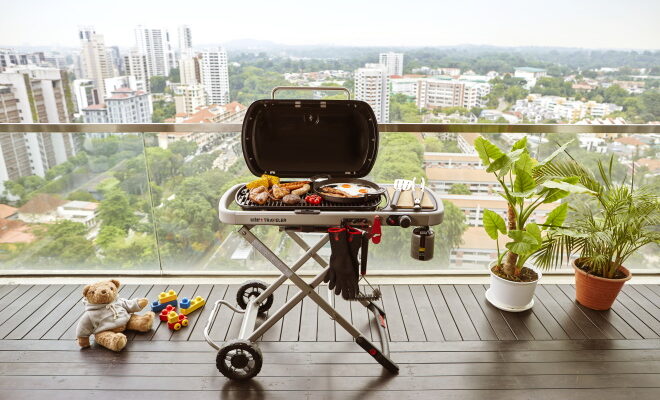
The Weber Traveler grill gets attention here because its cart-style build feels closer to a backyard cooker than a tabletop camp unit. The full-size model lists a 320-square-inch cooking area, one stainless steel burner, and a 13,000 BTU-per-hour input. Those numbers matter, but the shape matters more. You can stand up, cook, turn, and serve without crouching over a picnic table.
Here is the quiet truth: a lower, cheaper tabletop model can cook a burger. It can also steal half your prep space. At a tailgate, the table is already holding buns, foil pans, condiments, chips, paper towels, and someone’s phone. A grill with its own stand protects that space. That feels minor at home. In a crowded parking lot, it feels like order.
Why one burner can make sense in a parking lot
A single burner sounds like a compromise. In some ways, it is. You do not get the same zone control as a two- or three-burner backyard setup. You cannot run one side screaming hot and the other side low for gentle holding in the same way. For ribs, long cooks, or a serious two-zone steak setup, that limitation is real.
For tailgating, though, one burner can be the cleaner choice. Most parking-lot menus are short, fast, and repeatable. Burgers. Sausages. Chicken thighs. Veggie skewers. Breakfast sausage. Toasted buns. You are not managing a five-course backyard dinner. You are feeding people in waves while the clock keeps moving.
That is why the propane grill for tailgating has become less about raw power and more about steady control. One burner also means fewer knobs, fewer failure points, and a simpler cook for the person who is also watching the cooler, the playlist, and the kickoff time. The non-obvious win is mental space. Simple gear leaves you more room to enjoy the day.
The Real Reason the Traveler Became a Parking-Lot Favorite
Popularity in outdoor gear is rarely about one headline feature. It grows when a product fits the habits people already have. The Traveler is not trying to replace a large patio cooker. It is built for the fan who leaves the house with one cooler, one chair, one tote, and a plan to cook fast before the crowd shifts toward the gates.
Setup speed beats feature count before a game
A grill can have an impressive spec sheet and still be a pain where it matters. If setup takes too many steps, people start cutting corners. They balance it on an uneven table. They skip preheating. They crowd food across the grate because the first batch took too long. Bad habits often come from rushed gear.
The Weber Traveler grill works because its main promise is practical: unfold, lock, connect fuel, preheat, cook. That simple rhythm suits U.S. tailgates, where arrival windows are messy. Traffic stacks up around NFL stadiums. College lots fill early. Someone always forgets ice. A cooker that reaches cooking position without a toolbox feels calm in the middle of that.
For more planning around outdoor meals, a guide like game day outdoor cooking checklist can sit beside this kind of grill choice. The cooker is only one part. The smarter setup includes a lighter, backup utensils, foil, a thermometer, trash bags, water, and a clear raw-food container. That last item saves more tailgates than any fancy accessory.
A backyard feel in a folded package
The full-size Traveler weighs 49 pounds, which is not featherlight. That matters. This is not the unit you carry across a campground trail with one hand while holding a lantern in the other. It is better thought of as a rolling parking-lot cooker. Once that clicks, the weight feels less like a flaw and more like part of its stability.
Its closed dimensions also tell you what kind of buyer it fits. At 37.2 inches high, 43.6 inches wide, and 23 inches deep when closed, it needs real cargo planning. It can fit many larger vehicles, but you should measure your cargo area before assuming anything. Tailgaters with compact sedans may prefer a smaller tabletop option or the compact Traveler version.
That is where the shopping decision gets honest. The best tailgate grill is not always the smallest one. Sometimes the better pick is the unit that opens into a normal cooking height and gives you enough grate space to feed six people without turning lunch into six separate shifts. A little extra bulk can buy back the one thing tailgates never have enough of: time.
Where It Wins, Where It Annoys, and Who Should Skip It
No grill deserves praise without a few bruises. The Traveler is strong for parking lots, parks, campsites with vehicle access, and weekend trips. It is less convincing for people who want smoke flavor, ultra-light packing, or true multi-zone cooking. That does not make it bad. It makes it specific, and specific gear is often the gear people keep using.
The best buyer is not always the backyard griller
The ideal buyer is someone who cooks away from home often enough to care about comfort. Maybe you follow an NFL team and host friends in the same lot every other Sunday. Maybe you take kids to travel baseball tournaments and need lunch that costs less than concession food. Maybe your apartment patio is small, but weekend trips are part of your life.
For that person, a propane grill for tailgating makes sense because fuel is easy to manage and heat is ready fast. Charcoal has romance. It also has ash, cooling time, and more cleanup. In some stadium lots, charcoal rules can be stricter than propane rules, so you need to check the venue before loading anything.
The counterintuitive point is that the Traveler may be too much grill for someone who grills away from home once a year. If your only plan is one beach day, renting space on a public park grill or borrowing a smaller unit may be smarter. Good gear should match a habit, not a fantasy version of your calendar.
The weak spots show up after the food is gone
Cooking gets the attention, but cleanup decides whether you bring the grill again. Grease, foil, warm grates, and a packed parking lot can turn the last twenty minutes into a chore. Any rolling cooker still needs cooling time. You cannot fold it hot, shove it into the cargo area, and hope for the best. That is how melted plastic, grease spills, and bad smells happen.
The single-burner layout also asks for a little discipline. You should not overload the grate with cold meat straight from the cooler and expect perfect browning. Give the grill time to recover. Cook in batches when needed. Keep the lid closed when it helps heat rebound. Small choices matter more on travel-size gear than they do on a large backyard unit.
A buyer comparing options should read beyond star ratings and use a practical checklist like small patio grill buying guide. Ask where it will live, who will lift it, how often it will travel, and what menu it will cook. That last question cuts through the noise. A burger-and-brat fan needs different gear than a steak perfectionist.
How to Cook Smarter on Game Day
The grill can only do half the job. The rest comes from the cook. Tailgating rewards people who plan a menu around speed, safety, and repeatable timing. The best food in the lot is not always the fanciest food. It is the food that comes off hot, tastes fresh, and does not trap the cook behind the grate for the whole morning.
Plan the menu around zones, not volume
Even with a single burner, you can still think in zones. One side can be your active browning space, while a cooler edge or upper area near the lid becomes a short holding spot. You are not creating steakhouse-level temperature zones, but you are keeping food moving with purpose. That beats dumping everything on at once.
A smart game-day menu has stages. Start with sausages or thicker items that need more time. Move to burgers once the crowd is ready to eat. Toast buns at the end, not the beginning. Add peppers or onions in a grill basket if you want the smell that pulls people over from the next parking space. The tailgate grill becomes more than a heat source when the order makes sense.
One useful trick is to prep at home but cook on site. Shape burger patties, slice onions, wash lettuce, and pack condiments in squeeze bottles. Do not season everything hours early unless the food benefits from it. Salt can change texture. Wet marinades can make flare-ups more likely. The best prep reduces work without hurting the cook.
Food safety is part of the tailgate, not a footnote
A parking lot is not a kitchen, so you have to build a small kitchen system. Keep raw meat sealed and low in the cooler. Pack a separate clean plate for cooked food. Bring extra tongs. Use disposable towels and water for hands and surfaces. None of this looks exciting, but it keeps the day from becoming a story nobody wants to repeat.
The USDA’s tailgating food safety guidance makes one point every outdoor cook should respect: use a food thermometer because grilled meat can brown before it reaches a safe internal temperature. That matters more at a tailgate, where wind, cold weather, and distraction can fool your eyes.
This is also where the Weber’s steady, familiar cooking posture helps. When you stand at a comfortable height, you are more likely to check food, move it properly, and avoid messy shortcuts. Comfort is not luxury here. Comfort supports better habits. In a stadium lot, that can be the difference between relaxed cooking and rushed guessing.
Conclusion
The Traveler’s rise says a lot about how Americans cook away from home now. People still want flame, smell, and the small theater of food coming off the grate, but they want less hassle around it. The Weber Traveler Portable Gas Grill fits that shift because it gives tailgaters a standing cooker, usable grate space, and a setup that feels controlled rather than fragile. It is not the right answer for every buyer. Lightweight campers, charcoal loyalists, and backyard cooks who need several heat zones may want something else. For stadium lots, park days, weekend road trips, and family sports schedules, though, it lands in a useful middle lane. Measure your cargo space, check your venue rules, plan a simple menu, and pack like cleanup matters. If that sounds like your kind of cooking, this grill has a clear job. Let it do that job well, and game day gets easier.
Frequently Asked Questions
Is the Weber Traveler good for tailgating?
Yes, it works well for tailgating because it rolls, stands at cooking height, and offers enough grate room for common game-day foods. It suits burgers, brats, chicken pieces, vegetables, and breakfast sandwiches without needing a full patio setup.
How many burgers can the Weber Traveler cook at once?
The full-size model gives you 320 square inches of main cooking space, which is enough for a solid batch of burgers. The exact number depends on patty size, spacing, and whether you also cook buns or vegetables on the grate.
Is the Weber Traveler too heavy for one person?
At 49 pounds for the full-size model, it is manageable for many adults but not effortless. The rolling cart helps once it is on the ground. Lifting it into a high SUV cargo area may feel awkward for some people.
Does the Weber Traveler use small propane cylinders?
Yes, the standard setup uses disposable liquid propane cylinders. Some owners may choose adapter setups for larger tanks, but that depends on the right hose, safe handling, and where the grill will be used.
Can you cook steak on the Weber Traveler?
Yes, steak is possible, especially thinner cuts or moderate portions. Let the grate preheat well, avoid crowding, and use a thermometer for accuracy. A large backyard cooker gives more zone control, but the Traveler can handle a simple steak meal.
What makes the Traveler different from a tabletop grill?
The built-in cart is the biggest difference. You do not need to give up table space or crouch while cooking. That matters at tailgates because prep surfaces are limited, and a stable cooking height makes the process calmer.
Is the compact Weber Traveler better than the full-size version?
The compact model is better for smaller vehicles, lighter packing, and fewer people. The full-size version is better when cooking for a group matters more than cargo savings. Your vehicle space and usual guest count should decide it.
What should I pack with a propane grill for tailgating?
Bring fuel, a lighter or backup igniter, a food thermometer, clean tongs, foil, paper towels, trash bags, water, heat-safe gloves, and separate plates for raw and cooked food. A simple packing system prevents most game-day cooking problems.