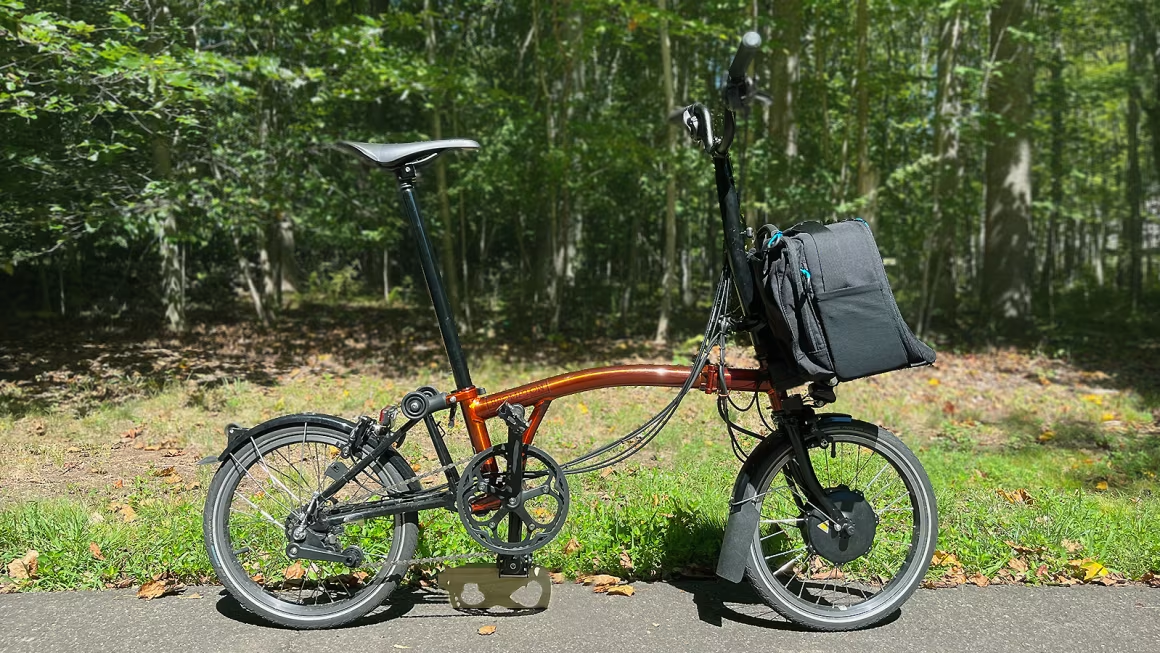
Small bikes used to feel like a compromise in the United States. They saved closet space, slipped onto trains, and made apartment life easier, but many riders still saw them as backup transportation. The Brompton Electric Folding Bike changes that conversation because it brings a premium British folder into a U.S. market that now cares about storage, traffic, gas costs, and daily convenience at the same time. For shoppers who track practical product launches through consumer lifestyle updates, this one matters because it is not aimed only at bike hobbyists. It speaks to people in Boston walkups, Brooklyn studios, Chicago condos, Seattle apartments, and Bay Area townhomes where a full-size bike can feel like furniture you did not ask for. The bigger story is simple: Americans are no longer buying small mobility products only for emergencies. They want gear that fits real life, carries well, rides with confidence, and does not turn every errand into a parking problem.
Why the Electric Folding Bike Matters for U.S. Riders
The American bike buyer is changing, but not in the neat way brands often describe. People still want range, speed, and comfort, yet many also want a bike that disappears when the ride ends. That is the tension Brompton walks into. A powered folder has to feel serious on the street, then polite inside a hallway, elevator, office corner, or train car. Most bikes can do one of those jobs. Few can do both without making you regret the purchase.
The real demand is storage, not novelty
A lot of U.S. shoppers first notice a Brompton because it folds. That sounds obvious until you compare it with how people live. A renter in Washington, D.C. may have room for a desk, a bed, and a narrow coat closet. A homeowner in Austin might have a garage, but that garage may already hold tools, kids’ gear, holiday bins, and one car squeezed in at an angle. The compact commuter bike has moved from niche gadget to practical answer.
The non-obvious point is that folding is not only about small homes. It is about control. You can bring the bike indoors instead of locking it outside all day. You can keep it near your desk instead of hoping a rack is open. You can take it in an Uber if weather turns ugly. That changes the risk math.
A Brompton e-bike also appeals to riders who have already rejected bulky battery cycles. Some full-size assisted bikes are pleasant on open paths but awkward in daily American settings. Try dragging one up apartment stairs after work. The romance fades fast.
Why “portable” has to mean more than light
A light bike can still be annoying. If the fold is clumsy, if the pedals catch your pants, or if the battery shape fights your hand, the number on the scale does not save the experience. Brompton’s reputation comes from building around the fold first, not treating it as an afterthought.
That matters for a folding bike for commuters because the hardest part of the day is often the handoff. Street to lobby. Lobby to elevator. Train platform to office. Coffee stop to grocery aisle. Those moments punish messy design more than a flat bike lane ever will.
One useful comparison is the airport carry-on bag. The best one is not the largest or the flashiest. It is the one that rolls straight, fits the bin, and does not start a fight at security. A folding e-bike has the same job. It should make transitions feel boring. Boring is good here.
How Brompton Fits the American Commute
U.S. commuting is not one thing. A rider in Portland may mix protected lanes with light rail. Someone in Los Angeles may use a bike for the first and last mile around Metro stops. A New Yorker may want a machine that can survive potholes, elevators, and walk-up stairs in the same afternoon. Brompton’s challenge is not to win a lab test. It has to win the messy middle of American movement.
The first-mile problem finally gets a premium answer
Most transportation pain hides in short distances. Your office is too far to walk from the train. The parking garage is ten blocks away. The grocery store is close, but not close enough when it is hot. Those gaps are where a compact commuter bike earns its place.
Brompton’s assisted models make sense because they do not ask you to dress like a cyclist every time. You can ride in normal clothes, arrive without feeling cooked, and fold the bike before stepping inside. That is a different promise from the weekend fitness bike hanging in the garage.
Here is the counterintuitive part: the motor may be less about speed than consistency. A rider who knows they can handle hills, headwinds, and a heavy backpack is more likely to ride on Tuesday, not only on a sunny Saturday. That habit is where value shows up.
Bigger wheels change the U.S. conversation
Classic Brompton bikes are famous for small wheels and a sharp fold. The newer larger-wheel direction matters in America because many streets are rougher than marketing photos admit. Expansion joints, broken asphalt, sunken utility covers, and winter damage can make tiny wheels feel nervous under riders who are new to folding bikes.
A larger-wheel Brompton e-bike aims at people who wanted the brand’s folding logic but wished for a calmer ride. That does not make the older format wrong. It means the U.S. market has enough riders now to support different needs.
Think about Chicago after freeze-thaw season or Philadelphia side streets after utility work. Comfort is not a luxury there. It is what keeps a rider from leaving the bike at home. The best folding design still has to meet the road under your tires.
What Buyers Should Check Before Paying Premium Money
Brompton sits in the expensive end of the folding market, so the buying decision needs more honesty than hype. A lower-cost folder may be enough for short errands. A cargo e-bike may suit a parent carrying a child. A full-size commuter may feel better for long suburban paths. The reason to pay for Brompton is not one feature. It is the mix of fold, ride, parts quality, service network, and daily fit.
Match the bike to your actual route
The wrong buyer starts with the spec sheet. The better buyer starts with Tuesday morning. How many stairs do you face? Will you carry the bike into a train? Is your route flat, hilly, broken, or crowded? Do you need to store it under a desk, inside a closet, or behind a couch?
A folding bike for commuters should be judged by repeated friction. One awkward carry is fine. Fifty awkward carries become resentment. One short hill is fine. A headwind every evening can change your opinion in a week.
This is why test rides matter. A five-minute spin around a shop parking lot is better than nothing, but a route with curbs, stops, tight turns, and a small hill tells you more. A premium folder should feel calm during the annoying parts, not only the easy stretch.
Know the rules before you ride
Electric bike laws in the United States can shift by state, city, path, and park system. Before buying, check state-by-state e-bike rules, then confirm local trail or transit policies. A bike that is legal on one street may face limits on a shared path nearby.
This is not meant to scare buyers. It is meant to prevent dumb surprises. A rider in California, New York, Florida, or Colorado may face different access rules, helmet expectations, age limits, or path restrictions. The bike can be well made and still be the wrong fit for one local use case.
The non-obvious insight is that a slower, well-classed, pedal-assist machine can be more useful than a faster gray-area device. It may enter more spaces, draw less attention, and feel easier to insure, service, and explain. Practical freedom beats headline speed.
Where Brompton Wins and Where It Still Has Limits
Brompton’s American push lands at a moment when buyers are tired of disposable tech. A bike is not a phone case. It has to handle rain, grit, vibration, theft risk, storage abuse, and the small knocks of daily life. That favors brands with long repair cultures. Still, no product gets a free pass because the logo is respected.
The strongest case is daily ownership
The best argument for a Brompton is what happens after the ride. You fold it, carry it, park it indoors, and keep moving. That ownership pattern can matter more than motor output. A fast bike locked outside with anxiety is not always better than a calmer bike sitting beside your desk.
A compact commuter bike also helps people who want one machine for mixed transportation. Ride to the station. Fold it. Ride from the next stop to work. Fold it again. Pick up a small grocery order on the way home. That rhythm is where the brand’s design language makes sense.
For another buyer, though, the price may feel hard to defend. If your city has safe parking, wide paths, and no need to carry the bike indoors, a larger and cheaper assisted bike may suit you. Premium design solves specific problems. It does not erase every other option.
The weak spots are worth naming
Small folding bikes can feel different from standard bicycles. Steering may feel quicker. Cargo space needs planning. Batteries add weight. Replacement parts and service can cost more than casual riders expect. None of that ruins the case, but it should shape the purchase.
A Brompton e-bike also asks you to be honest about your body and routine. Can you lift it comfortably? Will you fold it daily, or will you leave it open in the garage? Are you buying it for a commute you already understand, or for a fantasy version of yourself who rides everywhere?
That last question sounds harsh, but it saves money. The best bike is not the one with the most admired brand name. It is the one that removes the excuse you use most often. For many Americans, that excuse is storage. For others, it is distance, weather, hills, or fear of theft.
Conclusion
Brompton’s arrival in this part of the U.S. e-bike conversation feels less like a flashy launch and more like a sign that American transportation habits are maturing. People want small vehicles that work across the whole day, not only during the ride. That is why the Electric Folding Bike deserves attention beyond cycling circles. It fits a country where apartments are tighter, traffic feels heavier, and short car trips have started to look wasteful. Still, the smartest buyer will not treat the badge as magic. Test the carry. Study the fold. Check your local rules. Compare it against your actual route, not a perfect weekend loop. A premium folding e-bike should reduce friction every time you touch it. If it does that, the price becomes easier to understand. If it does not, keep looking. Buy the bike that fits your real Tuesday, and you will ride more than you planned.
Frequently Asked Questions
How much does a Brompton electric model cost in the U.S.?
Pricing depends on the model, build, and retailer, but Brompton’s powered folders sit in the premium range. Expect a higher price than many direct-to-consumer e-bikes because the cost reflects the fold design, frame work, parts, and brand support.
Is a Brompton e-bike good for American city commuting?
Yes, it can be a strong city option when storage, train access, office parking, or theft risk matter. It makes the most sense for riders who need a bike that can come indoors instead of staying locked outside for hours.
What makes Brompton different from cheaper folding e-bikes?
The main difference is the fold-first design. Many cheaper models fold, but they still feel bulky when carried or stored. Brompton focuses on the full ownership loop: riding, folding, carrying, parking, and repeating that routine daily.
Can I take a Brompton on public transit in the United States?
Many transit systems allow folded bikes, but rules vary by agency, time, and crowding. Check your local train, subway, or bus policy before relying on it for commuting. A compact fold often helps, but it does not override posted rules.
Is the larger-wheel Brompton better than the classic small-wheel style?
It depends on your roads and priorities. Larger wheels can feel calmer on rough pavement, while the classic small-wheel format can feel tighter and easier to store. Riders dealing with potholes or longer trips may prefer the smoother feel.
How far can a Brompton powered folder go on one charge?
Range depends on rider weight, hills, temperature, assist level, wind, tire pressure, and stop-and-go traffic. Brand estimates are useful for comparison, but your real route matters more. Test under normal commuting conditions when possible.
Is a folding bike for commuters worth the premium price?
It is worth it when the fold solves a daily problem. Apartment storage, office security, train transfers, and stair carrying can justify the cost. If you never need to fold or carry your bike, a standard commuter e-bike may offer better value.
What should I check before buying one?
Check weight, folded size, local service options, battery handling, ride comfort, warranty terms, and local e-bike rules. Then test the exact actions you will repeat: lifting it, folding it, rolling it, storing it, and riding it over your usual roads.